
Introduction
One of the most anticipated moments in a parent’s life is watching their baby take those first wobbly steps. But when exactly does this happen? The question “what age do babies start walking” is one of the most common concerns for new parents. The short answer is that most babies begin walking around their first birthday, but the normal range is much wider than many people realize. Some babies walk as early as 9 months, while others take their first independent steps closer to 18 months. Understanding this range can help parents know what to expect and when to seek guidance.
Quick Biography / Facts
- Average Age: About 12 months
- Normal Range: 9 to 18 months
- Earliest Typical: Around 9 months
- Latest Typical: Up to 18 months
- Key Milestone: Walking alone by 18 months
- Precursor Skills: Crawling, pulling up, cruising along furniture
- Gender Differences: Boys and girls typically learn to walk around the same time
- Time to Mastery: It takes 4 to 6 weeks of practice to get good at walking
Early Life: The Journey to First Steps
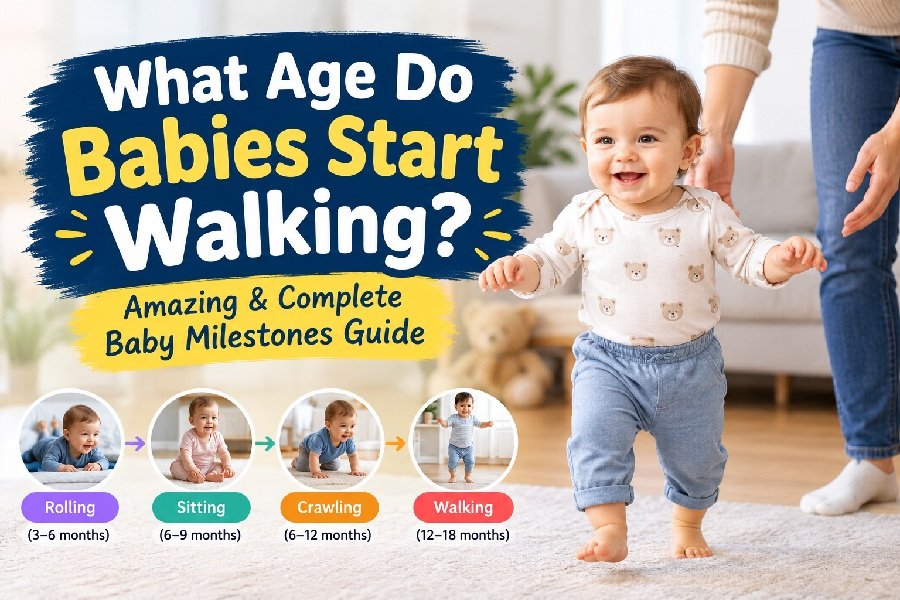
Learning to walk is not a single event—it is the culmination of months of physical development. Before a baby can walk, they must master a series of motor milestones that build upon each other. This journey typically begins in the first few months of life with simple movements like lifting the head and rolling over.
By around 6 to 8 months, most babies can sit independently, which builds the core strength needed for standing . Crawling often follows between 6 and 9 months, though some babies skip crawling entirely and find other ways to move, such as scooting or rolling .
Between 9 and 12 months, babies begin pulling themselves up to a standing position using furniture or a parent’s hands . This is a major step toward independent walking. Soon after, they start “cruising”—walking while holding onto furniture for support . This phase helps them develop balance and coordination while building confidence.
Family: The Role of Parents and Caregivers
While babies naturally develop the ability to walk, the environment and encouragement they receive from family members can play a supporting role. Parents and caregivers can help by creating safe spaces for exploration, such as baby-proofed areas with soft flooring.
Holding a baby’s hands while they practice stepping, offering praise, and placing toys just out of reach to encourage movement are simple ways to support this milestone. However, it is important to remember that every baby develops at their own pace, and excessive pressure or forcing a baby to walk before they are ready is not recommended.
Education: How Babies Learn to Walk
Babies are natural learners, and walking is a skill they teach themselves through repetition and experimentation. The learning process involves trial and error—falling, getting back up, and gradually improving balance and coordination.
The brain and body work together in this process. The vestibular system (which controls balance), muscle strength in the legs and core, and visual-spatial awareness all develop simultaneously to make walking possible. Each baby’s “education” in walking is unique, which is why the age range for this milestone varies so widely.
Career: What This Milestone Means for Development
In developmental terms, walking represents a major career milestone for a baby. It marks the transition from dependent infant to mobile toddler. Once a baby can walk, their world expands dramatically. They can explore their environment, interact with objects and people more independently, and begin developing a sense of autonomy.
Walking also has developmental implications beyond movement. It supports cognitive development by allowing babies to explore and learn about their surroundings. It enhances social development as babies can approach others on their own. And it builds confidence as they master a new physical skill .
Achievements: Milestones Along the Way
The journey to walking includes several achievements that parents can watch for:
- Standing with support: Around 9 to 12 months, babies pull up to stand
- Cruising: Walking while holding onto furniture, typically around 12 months
- Standing alone: Briefly standing without support, often between 12 and 14 months
- First steps: Taking one or two steps before falling, usually around 12 months
- Walking independently: Walking across a room without holding on, typically by 18 months
Personal Life: What the Experience Is Like

For parents, watching their baby learn to walk is an emotional experience. There is the excitement of those first steps, the anxiety of inevitable falls, and the joy of seeing their child gain independence.
For babies, learning to walk is an adventure. They are driven by curiosity and the desire to explore. The process is often messy—there will be tumbles, wobbles, and wide-legged stances as they work out how to balance . The typical gait of a new walker is wide-based, with arms held out for balance.
It is also worth noting that once a baby starts walking, they may not master it immediately. Running and more advanced coordination typically develop between 15 and 18 months .
Net Worth: The Value of Early Intervention
While “net worth” is not a concept that applies to infant development, the value of understanding walking milestones cannot be overstated. Early identification of potential delays allows for timely intervention, which can make a significant difference in a child’s development.
The American Academy of Pediatrics recommends talking to a pediatrician if a child is not walking by 18 months . Some sources suggest that a neurological examination may be recommended for children not walking by this age to rule out any underlying disorders . Early intervention services can provide support and therapy if needed.
Interesting Facts
- Crawling is not a prerequisite. Some babies skip crawling entirely and go straight to walking .
- The range is wider than most people think. Walking alone can occur anywhere from 8.2 to 17.6 months in healthy children, according to WHO data .
- It takes practice. After those first steps, it takes babies 4 to 6 weeks to become proficient walkers .
- Boys and girls are similar. There is no significant difference in when boys and girls learn to walk .
- Wide-legged stance is normal. New walkers often walk with a wide-based gait for balance .
FAQs
1. What is the average age for babies to start walking?
The average age is approximately 12 months, though the normal range extends from 9 to 18 months .
2. Is it normal for a baby not to walk at 15 months?
Yes, it is within the normal range. Some babies take their first independent steps closer to 18 months .
3. When should I worry if my baby is not walking?
The American Academy of Pediatrics recommends consulting a pediatrician if a child is not walking by 18 months .
4. Do babies need to crawl before they walk?
No. While crawling is a common milestone, some babies skip it entirely and go straight to walking .
5. Does early walking mean my baby is more advanced?
Not necessarily. The timing of walking is a normal variation and does not reliably predict later intelligence or athletic ability.
Conclusion
So, what age do babies start walking? The average age is around 12 months, but the healthy range spans from 9 to 18 months. Every baby’s journey to walking is unique, shaped by their physical development, personality, and environment. Parents can support this milestone by providing safe spaces for practice, offering encouragement, and being patient. If a baby is not walking by 18 months, it is a good idea to talk with a pediatrician. Above all, it is important to remember that the timing of first steps is just one small part of a child’s remarkable development—and every step, whenever it comes, is worth