
Introduction
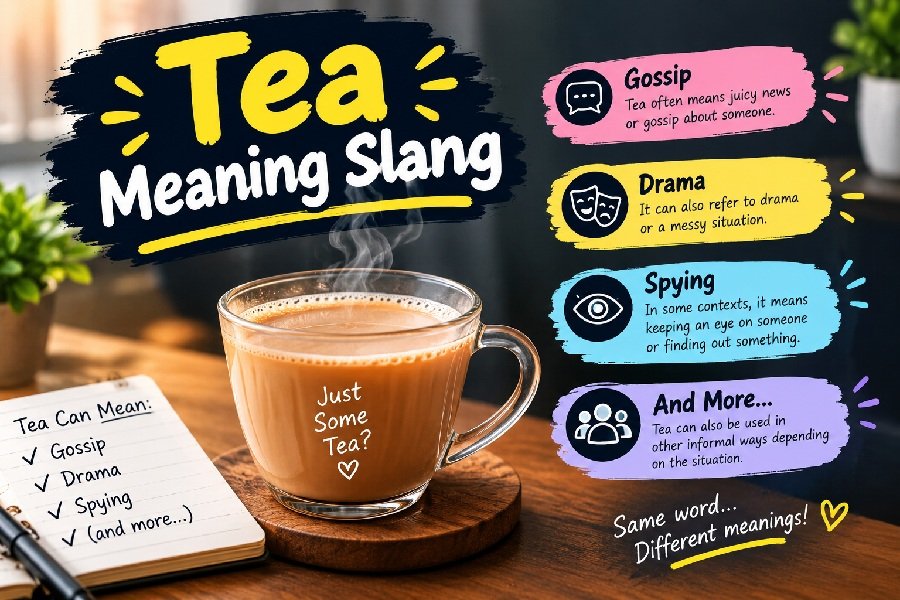
If you have seen someone write “What’s the tea?”, “Spill the tea,” or “I have some tea,” you may wonder why a simple drink is suddenly connected with gossip.
In modern informal English, tea is slang for gossip, juicy information, inside details, or the real story behind a situation. It is commonly used in text messages, social media posts, online conversations, entertainment discussions, and casual conversations.
For example, if someone says, “I have some tea about what happened yesterday,” they are not talking about a beverage. They mean they have interesting information or gossip to share.
The expression has become especially popular online, but its history goes back much further than TikTok, Instagram, or other modern social platforms.
Quick Facts About Tea Meaning Slang
| Term | Meaning |
|---|---|
| Tea | Gossip, inside information, or the real story |
| Spill the tea | Reveal or share the gossip |
| What’s the tea? | What happened? / What is the latest information? |
| I have the tea | I have interesting or private information |
| That’s the tea | That is the truth or the real situation |
| Hot tea | Fresh, exciting, or dramatic gossip |
| Weak tea | Uninteresting or unconvincing information |
| No tea, no shade | No gossip or disrespect intended |
The word is informal and should generally be understood according to the context. It can refer to harmless updates between friends, celebrity gossip, online drama, or more private information.
What Does “Tea” Mean in Slang?
The most common tea meaning slang is gossip or interesting inside information.
When someone says, “Tell me the tea,” they are asking for the details of a situation. They may want to know what happened between two people, what was said behind the scenes, or what information has not yet become widely known.
For example:
“Girl, what’s the tea?”
This usually means:
“What happened? Tell me what you know.”
Similarly:
“I have some tea for you.”
means:
“I have some interesting information or gossip to tell you.”
Tea can also refer to the truth rather than simple gossip. In the expression “That’s the tea,” the speaker is often saying that what has just been explained is the real or honest version of events.
Early History and Origin of the Slang
Unlike a person, the slang word tea does not have an early life, family, or education. Its history is better understood through the communities and forms of speech in which the expression developed.
The exact origin is not completely settled. Slang often develops through spoken language before it appears in written records, making it difficult to identify one person who invented a particular expression.
Historical evidence connects the slang sense of tea with Black gay and drag communities in the United States. One documented explanation connects the letter “T” with “truth” or a person’s real story. Over time, the pronunciation and spelling T/tea became associated with gossip and personal information.
Research into the history of the expression also shows that the gossip meaning was documented decades before its current social-media popularity. Word Origins notes written evidence from the early 1970s, while other historical references point to uses in Black gay discourse in the late 20th century.
Because the history involves several stages of slang development, it is better not to claim that one individual definitely invented the word.
Family and Cultural Background
The concept of family does not apply to a slang word. However, cultural background is important when discussing the history of tea.
The expression is strongly associated with Black LGBTQ+ and drag culture. Communities often create distinctive expressions that later move beyond their original social setting.
Tea is one example of language that traveled from a specific cultural context into wider entertainment and Internet vocabulary.
This history matters because modern users may encounter the word everywhere without realizing that its slang usage has a longer cultural history.
Education and Development of the Word
Tea did not receive a formal education. Instead, its meaning developed through spoken communication, cultural exchange, entertainment, and popular media.
Slang frequently changes naturally. A word can begin with a relatively specific meaning within one community and later acquire a broader meaning as more people use it.
In the case of tea, the connection between “T” and truth, gossip, and personal information helped create a useful expression for revealing information.
The phrase also became especially effective because it naturally supports expressions involving an actual cup of tea. Words such as “hot,” “spill,” and “sip” can all be used playfully with the slang meaning.
Career and Popularity of “Tea”
A slang word does not have a career, but tea has had a significant journey through popular culture.
Its modern popularity grew as drag culture and related expressions reached wider audiences. RuPaul’s Drag Race, which premiered in 2009, helped introduce many drag-culture expressions to mainstream entertainment audiences. Dictionary.com specifically notes the show’s role in spreading “tea” into broader popular vocabulary.
The rise of social media then accelerated the process.
Platforms such as Twitter/X, Instagram, TikTok, YouTube, and messaging apps made it easy for users to discuss celebrity news, relationships, controversies, and everyday drama.
As a result, phrases such as “spill the tea” became recognizable far beyond their earlier cultural settings.
How “Tea” Is Used on Social Media
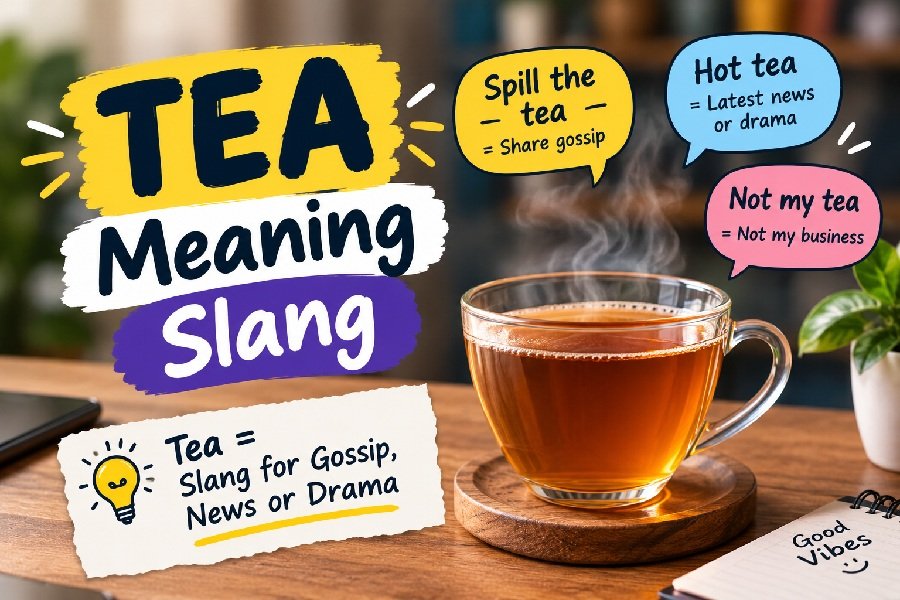
Today, tea is particularly common in online conversations.
Someone might post:
“I have some tea about that situation.”
Another person could respond:
“Spill!”
Here, “spill” means tell me everything.
The expression can be used for serious information, harmless gossip, celebrity news, or humorous conversations between friends.
For example:
- “What’s the tea?” — What happened?
- “Give me the tea.” — Tell me the details.
- “Spill the tea.” — Tell everyone what you know.
- “That’s the tea.” — That is the truth.
- “I’ve got some hot tea.” — I have some fresh or dramatic information.
The tone is generally casual and conversational.
What Does “Spill the Tea” Mean?
“Spill the tea” is probably the most recognizable expression involving this slang term.
It means:
“Tell me the gossip, secrets, or interesting details.”
The phrase is especially effective because it creates a visual metaphor. If tea is poured from a cup, it can “spill.” The metaphor makes the expression memorable and allows speakers to create related phrases such as “hot tea” and “sip the tea.”
The expression is now common in informal English, particularly in online conversations and entertainment-related discussions.
What Does “What’s the Tea?” Mean?
“What’s the tea?” simply means:
“What is the latest news or gossip?”
The phrase is usually directed at someone who knows something interesting about a situation.
For example:
Person A: “Did you hear what happened between them?”
Person B: “No! What’s the tea?”
Here, Person B is asking for the story or details.
It does not necessarily mean that the information is negative. “Tea” can be used for exciting news, surprising information, funny stories, or personal updates.
What Does “That’s the Tea” Mean?
“That’s the tea” is another popular expression.
It can mean:
“That is the truth.”
It may also mean:
“That is the real story.”
For example:
“He says he was busy, but he was actually at the party. That’s the tea.”
In this context, the speaker is emphasizing what they believe to be the real situation.
The expression is often used humorously or dramatically.
Achievements and Cultural Impact
Again, “tea” does not have personal achievements because it is a word rather than an individual.
However, its linguistic and cultural impact is significant.
The expression has moved from a relatively specific cultural context into mainstream informal English. It is now widely recognized by people who may have never encountered its original usage.
Its popularity also demonstrates how language can spread through:
- Television
- Drag culture
- Music and entertainment
- Social media
- Memes
- Online communities
- Celebrity discussions
Dictionary.com notes that the expression became more mainstream through entertainment and popular culture, including RuPaul’s Drag Race.
Personal Life
The concept of personal life does not apply to the slang term tea.
However, the expression is frequently used when discussing personal information. That is one reason the word became associated with gossip.
Someone might say:
“I don’t usually share people’s personal business, but I have some tea about what happened.”
This also shows why users should be careful with the term. Gossip can involve private information, and sharing someone’s personal details without permission can have real consequences.
Using slang casually does not remove the importance of privacy or accuracy.
Net Worth
Tea has no net worth.
It is a slang expression rather than a person, celebrity, company, or brand.
Therefore, websites or social posts claiming that “tea” itself has a particular net worth would be confusing the keyword with a person or business.
For an accurate explanation of tea meaning slang, there is no legitimate net-worth figure to report.
Interesting Facts About Tea Slang
1. Tea does not usually mean the drink online
When someone writes “I have tea,” they usually mean gossip or interesting information rather than a beverage.
2. “T” is important to its history
One explanation connects the slang to “T” meaning truth, although the exact history is more complicated and not completely settled.
3. “Spill the tea” is extremely popular
The phrase means to reveal gossip or inside information.
4. It has cultural roots
The slang is strongly associated with Black LGBTQ+ and drag culture, rather than being a term that was simply invented by modern social media users.
5. Social media helped spread it
The Internet transformed tea from a relatively specialized expression into widely recognized informal English.
6. Tea can mean truth
Depending on the context, tea can mean more than gossip. It can also refer to the honest or real version of a situation.
7. The word works with many expressions
Common combinations include spill the tea, hot tea, weak tea, what’s the tea, give me the tea, and that’s the tea.
When Should You Use “Tea”?
Tea is best used in informal situations.
It works well in:
- Text messages
- Group chats
- Social media comments
- Casual conversations
- Memes
- Entertainment discussions
- Friendly conversations
It is generally not appropriate for formal business writing, academic papers, official documents, or professional reports unless you are specifically discussing slang or popular culture.
For example, saying “Please provide the tea regarding the meeting” would sound unusual in a formal workplace.
Instead, tea belongs naturally in casual language.
FAQs About Tea Meaning Slang
1. What does tea mean in slang?
In slang, tea usually means gossip, juicy information, inside details, or the real story about a situation. It is commonly used in casual conversations and on social media.
2. What does “spill the tea” mean?
“Spill the tea” means to reveal or share gossip, secrets, or interesting information. It is one of the most common expressions using tea as slang.
3. What does “What’s the tea?” mean?
“What’s the tea?” means “What happened?”, “What is the latest gossip?”, or “Tell me the interesting details.”
4. Where did tea slang come from?
The slang is strongly associated with Black gay, LGBTQ+, and drag culture. One commonly cited explanation connects “T” with “truth.” The exact origin is not completely certain, and historical documentation shows that the usage predates modern social media.
5. Is tea slang still popular?
Yes. Tea remains widely recognizable in informal Internet language, particularly in social media, messaging, entertainment discussions, and casual conversations. Its meaning has expanded from gossip to include interesting news, personal updates, and “the real story.”
Conclusion
The tea meaning slang is much more interesting than simply calling it another word for gossip. In modern informal English, tea can mean gossip, juicy information, inside details, or the truth about a situation.
Expressions such as “What’s the tea?”, “Spill the tea,” and “That’s the tea” are now familiar across social media and everyday online conversations.
At the same time, the history of the word is worth remembering. Its slang usage has important connections to Black LGBTQ+ and drag culture and existed before today’s social-media environment.
So, the next time someone says “I have some tea,” they probably are not offering you a cup of chai. They are telling you that they have a story, some gossip, or interesting information to share.